Alphabet Activities- Find and Color: Unleash Early Literacy Potential
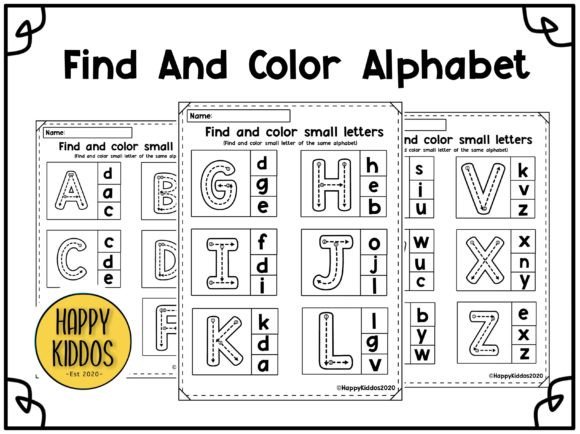
As creative professionals, we understand that the assets we choose for our audience—whether they are entrepreneurs, educators, or parents—need to do more than just exist; they need to perform. When it comes to early childhood education, the visual presentation of learning materials is not merely decorative; it is functional. Alphabet Activities- Find and Color represents a specific intersection of playful design and educational utility. This collection is not just a set of worksheets; it is a carefully curated digital tool designed to bridge the gap between visual recognition and cognitive retention for pre-K, kindergarten, and first-grade students.
The Visual Language of Early Learning
When you first open the zip file containing these worksheets, the immediate impression is one of clarity and engagement. The design style avoids the chaotic, over-stimulated aesthetic often found in mass-market educational products. Instead, it utilizes a balanced approach to white space and illustration. The visual characteristics are defined by clean lines and distinct letterforms, which are essential for young learners who are just beginning to differentiate between similar shapes, such as "b" and "d" or "p" and "q."
The personality of Alphabet Activities- Find and Color is warm, inviting, and structured. It strikes a balance between a handwritten font aesthetic—which feels personal and accessible to children—and the legibility required for educational instruction. This isn't about showcasing complex typography for the sake of art; it is about using visual cues to guide a child’s hand and eye. The "Find and Color" mechanic relies on high-contrast outlines and ample interior space, ensuring that the activity remains frustration-free for developing fine motor skills.
Strategic Application for Creators and Educators
For designers, marketers, and content creators in the educational niche, these assets offer a versatile foundation for brand identity and content strategy. Because the worksheets are delivered in a versatile PDF format, they integrate seamlessly into both digital and physical workflows.
Consider the following practical applications for your projects:
- Digital Marketing and Web Design: Use snippets of these worksheets as lead magnets. A "Free Letter A Worksheet" is a classic, high-converting offer for parenting blogs or educational SaaS landing pages. The visual appeal of the design assets elevates the perceived value of your opt-in, suggesting a premium font and professional curation.
- Print-on-Demand and Packaging: If you are an entrepreneur selling homeschool supplies or children's activity kits, these pages serve as excellent inserts. The PDF format ensures that the vector quality remains crisp when printed, maintaining the integrity of the lettering even on textured paper stock.
- Social Media Graphics: For Instagram or Pinterest creators, these pages provide ready-made content. You can photograph the completed worksheets or create digital mockups to showcase the activity. The visual style is consistent with modern, minimalist aesthetics that perform well on visual platforms.
Enhancing Visual Hierarchy and Readability
In the context of editorial design or instructional layout, visual hierarchy dictates how information is processed. Alphabet Activities- Find and Color inherently teaches this concept. By isolating specific letters amidst a field of distractors, the worksheets train the eye to scan and identify key information—a fundamental skill in reading.
For the adult user—be it a teacher, parent, or graphic designer creating educational content—the value lies in the legibility. Unlike complex script fonts or stylized serif fonts that might be used for branding, the lettering in these activities prioritizes recognition. This focus on readability ensures that the cognitive load is spent on learning the alphabet rather than deciphering the typeface. It is a masterclass in functional design where the form follows the educational function.
Evaluating Fit and Pairing Strategies
If you are utilizing these worksheets as part of a larger educational brand or product suite, consistency is key. When selecting additional typography to accompany Alphabet Activities- Find and Color—such as for instructions, headers, or marketing copy—consider the following:
- Contrast with Purpose: Since the activity sheets feature a creative font style that is likely bold and rounded, pair it with a clean sans serif font for body text. This creates a professional hierarchy where the playful elements stand out, and the instructional text remains easy to read for parents and educators.
- Avoid Visual Noise: Do not pair these worksheets with overly decorative display fonts in your marketing materials. The strength of the "Find and Color" design is its clarity. Let the worksheets be the focal point and use neutral typography to support them.
- Cohesive Branding: If you are building a brand identity around early literacy, use the style of these worksheets to inform your broader color palette and illustration style. The "personality" of the font—likely friendly and approachable—should be mirrored in your logo design and web design choices to create a seamless user experience.
The Business Value of Quality Design Assets
In the crowded market of educational resources, quality differentiates you. For content creators and small business owners, using high-quality design assets like Alphabet Activities- Find and Color signals professionalism. It moves a product from feeling "homemade" to feeling "curated."
Whether you are a blogger writing about homeschooling trends, a marketer for a children's brand, or a crafter selling physical goods, the tools you use reflect your standards. These worksheets provide a robust foundation—not just for the children learning their letters, but for the professionals building their businesses around educational excellence. By integrating these assets, you ensure that your offering is not only educational but also aesthetically aligned with modern modern typography standards and user expectations.